Sound familiar?Brampton
- The call
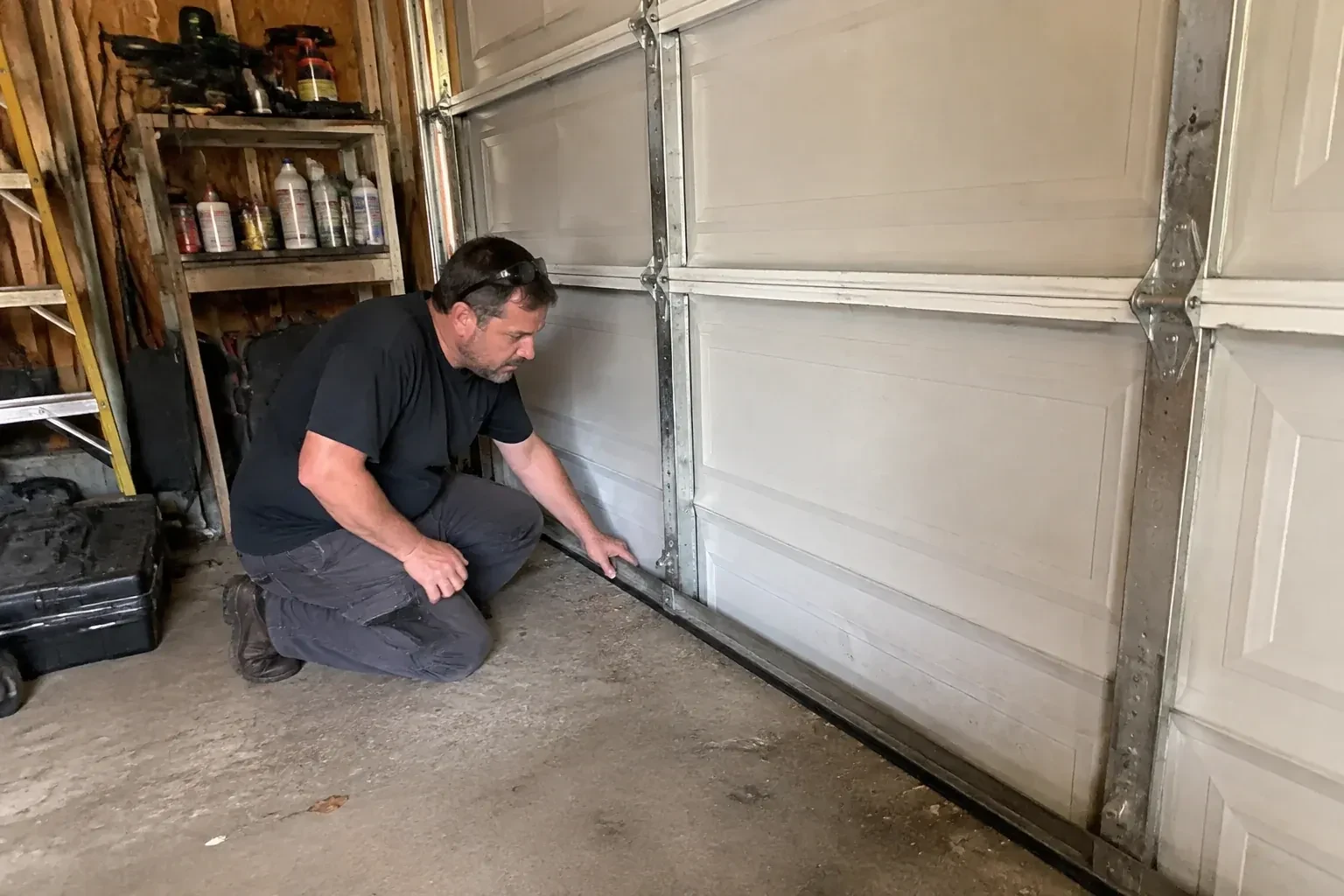
- Someone left the snow shovel leaning in the opening and the door came down on it. Now a loop of steel cable hangs loose beside the track and the door refuses to close the last few inches.
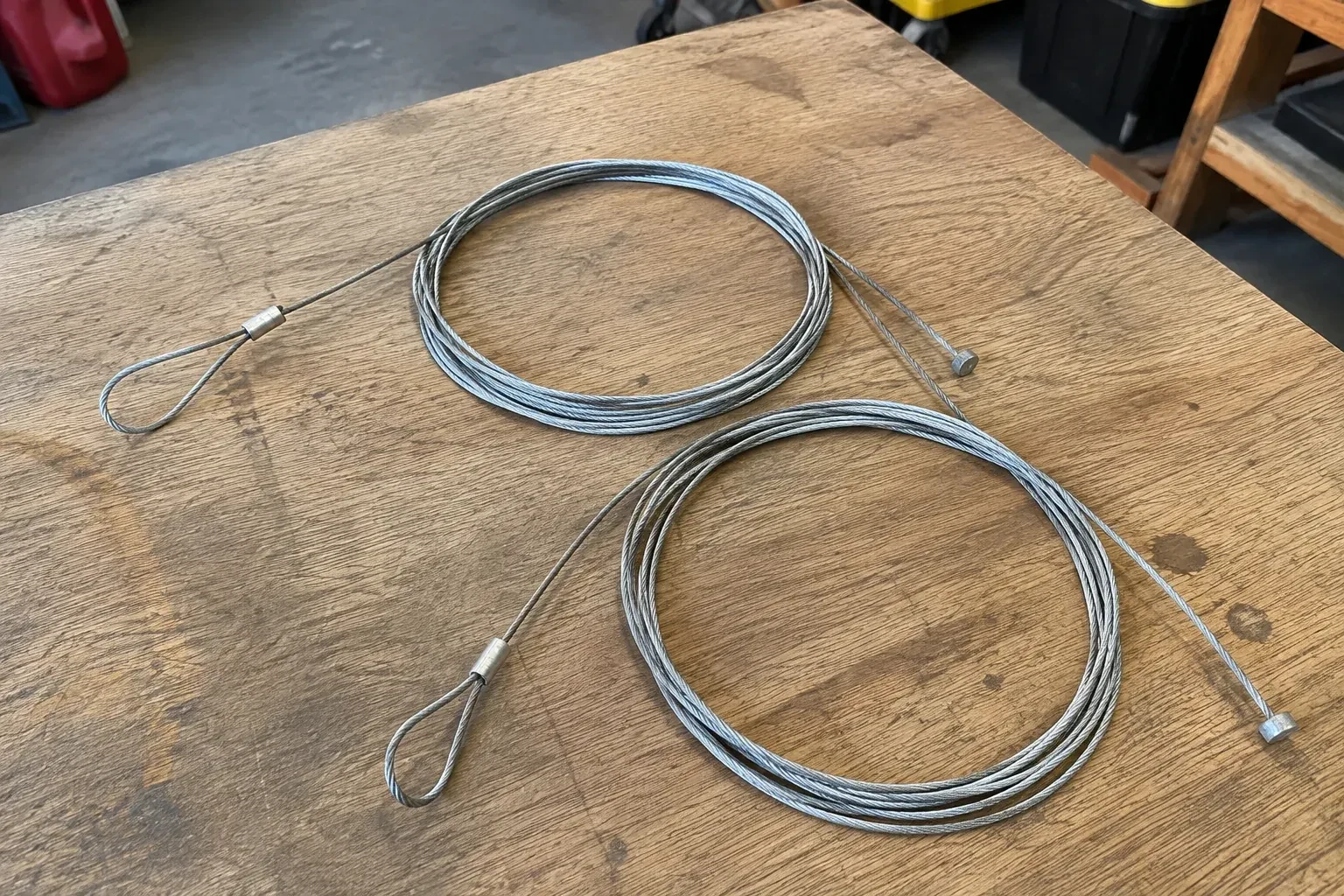
Winter is hard on the bottom of a garage door. Slush and road salt run off the car and pool exactly where the cables loop onto the bottom brackets, and wire rope that is wet and salted for four months a year rusts from the inside out. Snow packed under the door can also stop it short, letting the cables go slack and slip their drums. Cable replacement puts fresh galvanized cable on both sides, cleans or renews corroded brackets and resets the balance, and the technician can show you how a clear threshold and a light coat of lubricant carry the new set through many more winters.
Sound familiar?Brampton
Garage Door Cable Replacement · Brampton
Scene 1
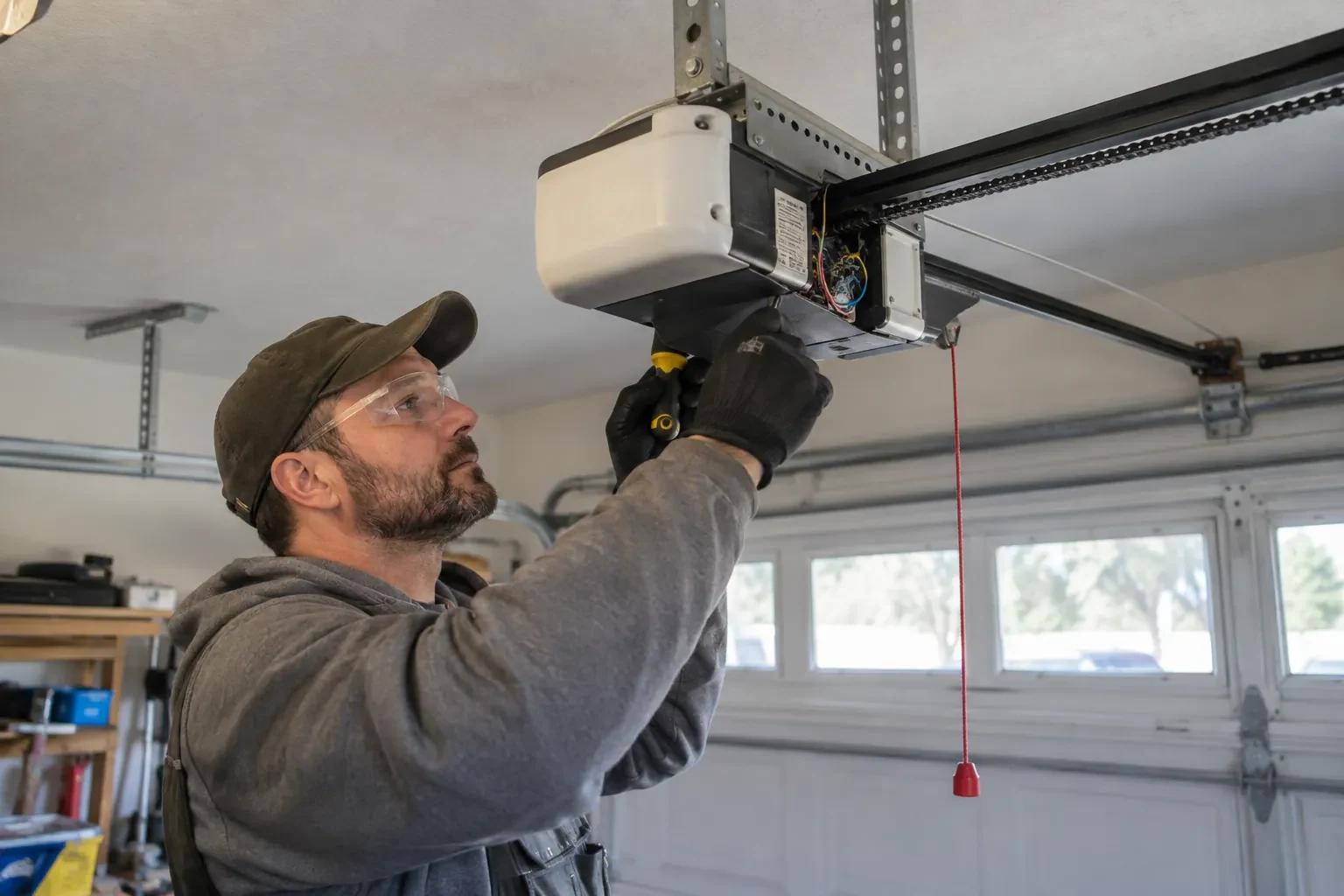
The last part of the first look follows the door's path. The technician checks that the vertical tracks are plumb and evenly spaced from the door, that the curve into the horizontal run is smooth, and that the track brackets are tight to the jamb. Rollers are checked for cracked wheels and bent stems, hinges for splits, and the bottom section for a dent or bow from a vehicle. Any of these can rub a cable or hold one corner back, and each is easier to correct while the counterbalance is unloaded. If the door is off its track as well, that is set straight as part of the same work.
Scene 2
On a door with springs along the tracks, the new cable is threaded from the bottom bracket up over the pulley at the front of the horizontal track, back to the pulley on the end of the spring, and forward to the adjusting clip on the track hanger. The technician replaces a pulley whose wheel is grooved or whose bearing has seized, since that is often what wore the cable, and checks the S-hooks and sheave forks. Each side is set to the same clip position so the door hangs level. A containment cable is confirmed through the centre of each spring and added if the door was never fitted with one.
Scene 3
Cables and springs age together, and your new cables now have a head start on the springs that remain. If the springs were assessed and left in place, you have a rough idea of the cycles they have left, and the sensible plan is to have them changed as a pair before they break, at which point the cables are checked again and simply re-tensioned. A door that starts to feel heavy, a spring that has gone quiet and then begins to creak, or a gap appearing in the coil are the signs to act on. Handled this way, the counterbalance is renewed in planned visits rather than on a difficult morning.
What shapes the quoteArmbro Heights Garage Door Pros
FeesSame any hour
Leave it. With one cable slack the door is being carried on one side only, so it is unbalanced and may bind or drop unevenly when moved. The technician arrives with clamps and a method for taking the door's weight before anything is moved, and that is the moment to lift it. Until then a stationary door is exactly what you want.
Yes, as a rule. The two cables were fitted together, have flexed around their drums the same number of times and have sat in the same slush, so the survivor is close to the end of its life. A new cable beside a stretched one also makes it harder to set the door level. Two matched cables give an even lift and one visit instead of two.
Yes, and both cause trouble. A cable that is too long runs out of drum groove and starts a second layer over the first, which wears it and throws the balance off near the top of travel. A cable that is too short leaves the door hanging out of level or the drum without a secure wrap. The correct length comes from the door height, the drum and the lift type, so the technician measures rather than guesses.
PeelOntario
Garage Door Cable Replacement · Armbro Heights, Peel Village
Every square is one home in a hundred.
On-site assessment
Your older door has springs along the tracks, and one cable has slipped off its pulley and dangles slack.
(289) 901-5739, open 24/7.
On-site assessment preferred · (289) 901-5739, open 24/7