Armbro Heights Garage Door ProsBulletin 1 of 3Brampton, Ontario
Extension Spring Replacement: what the visit covers
A spring visit follows a fixed order, so you know what to expect.
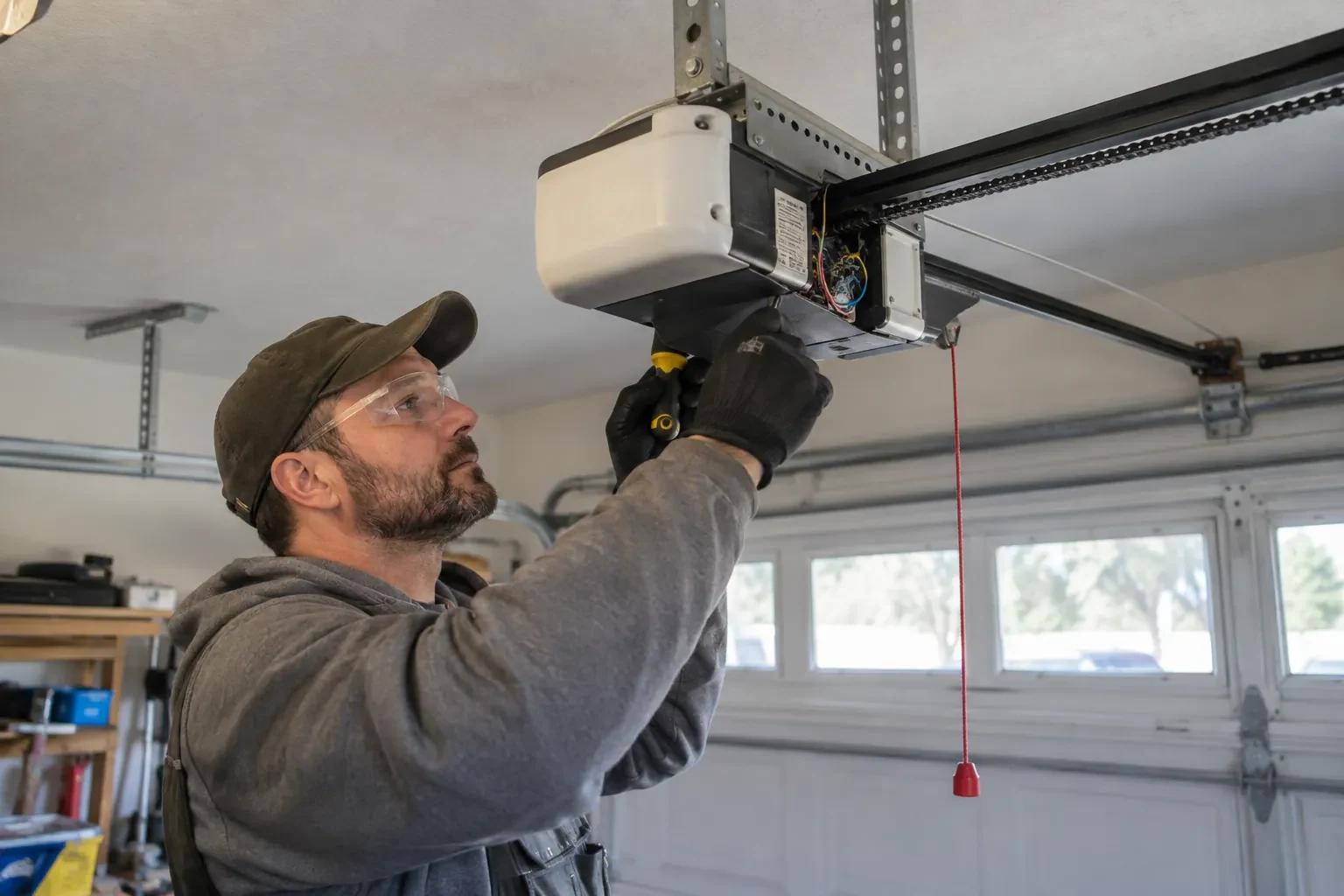
A spring visit follows a fixed order, so you know what to expect. The technician releases the opener, raises the door fully and clamps it, because an extension spring is at its slackest with the door open. Then both springs, the pulleys, cables, hangers and containment cables are inspected and the door is weighed. Old springs come off, new ones go on with containment cables threaded through, cables are routed over the pulleys and both sides are hooked at the same setting. The clamps come off, the door is balanced by hand, and only then is the opener reconnected, adjusted and put through its reversal tests.
Torsion or extension, and which extension layout
The technician confirms the counterbalance type before choosing any part. Extension springs hang beside the horizontal tracks, one each side, with a pulley on the front end of each spring and a second, fixed pulley on the track angle near the door opening; the lift cable runs from the bottom corner over both. A torsion system has a spring on a shaft above the opening and belongs to a different service. Extension systems also vary: single or double springs per side on heavier doors, hangers fixed to the ceiling or to the rear track support, and cables that adjust at an S-hook, a clip or an eyebolt. Each affects the parts brought to the job.
Bringing the opener back into step
The opener is the last thing touched. Once the door balances by hand, the trolley is reconnected and the door run through several full cycles under power while the technician watches the cables ride their pulleys and the springs stretch evenly. Because the door is now lighter to move than it was on tired springs, the opener's force and travel settings are reset to suit; a force setting left high would push a balanced door too hard. Then the reversal checks are done in front of you: a block laid flat under the centre of the door, which the door must touch and reverse from, and a hand passed through the photo-eye beam while the door closes.
Containment cables, and leaving them be
Your door now has a cable running through the middle of each spring, anchored at the back hanger and at the front of the track. It carries no meaningful load while the springs work, though a trace of slack as the door cycles is normal. Its job begins only if a spring ever breaks, when it holds the pieces on the cable instead of letting them fly. It should not be removed, used to hang anything, or tied back to the wall. If it ever looks badly slack, frayed or pulled from its anchor, call to have it corrected promptly rather than waiting for a routine visit. A home inspector looks for this cable when a house is sold.